Hello again, I hope you have been doing well. Looking forward to getting back to sharing more often now that I have completed the physical therapy to heal an injured shoulder.
Even when I’m not posting, I’m still having great conversations with awesome people usually on some aspect of accessibility and inclusion.
Recently, I got to do something a little different. I sat down with Holly Porter, host of All Things Retreat and CEO of Retreat RNR, to talk accessibility from an angle I don’t get to explore often: retreats and in-person events.
Holly lives in a world of transformative experiences and intentional gatherings, and she wanted to know how accessibility fits into that world.
She wanted to know about both the business side and the physical, in-person side.
Here’s what came out of our conversation.
ON With The Show
Audio Players
Business Owners Move for Their Bottom Line, Not Just Ethics
Holly opened by pointing out accessibility is often treated as a moral issue rather than a legal one. I agreed, but added the piece I’ve learned over almost two decades of doing this work: a business owner who won’t be moved by “it’s the right thing to do” will very often be moved by their bottom line.
That’s why I try to lead with the positive, competitive benefits of accessibility rather than only the compliance angle.
Emphasizing things like better user experience for everyone, not just people with disabilities, and real influence on how search engines and AI bots evaluate a website.
How a Carnival Kid Became an Accessibility Advisor
Holly asked how I went from carnival owner to equipment broker to where I am now.
Honestly, it happened by doing the next thing, not by planning it.
When my family’s carnival business ended after my dad’s death, I needed a website to broker used rides, so I taught myself to code back in 2007.
People started asking how I did it as a blind entrepreneur, which led to life coaching.
Except nobody wanted coaching on their goals, they wanted to know how I was getting booked on podcasts and featured in articles.
That became a business of its own, including early work with Alex Sanfilippo at PodMatch, and later writing for AudioEye.
I didn’t plan on becoming a “trailblazing accessibility advisor.” I just kept going where people actually needed me.
Where AI Actually Helps and Where It Falls Short
Holly asked directly whether I’m using AI more these days, and I was honest that I fought it at first.
My first experience with ChatGPT just wasn’t accessible enough with my screen reader to make we want to keep using it. A friend eventually convinced me to try Claude the way you’d suggest strawberry to someone who doesn’t like chocolate ice cream.
Claud has been a much better experience. Not perfect, but the kind of accessibility friction that’s more like sand in your sbeing very helpful to people with disabiliities include reptitive tasks and forms,
hoe than pebbles.
Where I think AI genuinely helps people with disabilities right now
Repetitive tasks and forms not re-entering the same information over and over
Security-sensitive tasks for people who have difficulty with fine motor control
Real-world logistics
I described a recent Uber ride where the AI pulled my flight info, confirmed it was on schedule, and scheduled my pickup automatically
Where it still falls short
A lot of AI-powered tools being built into everyday apps simply aren’t accessible to screen reader or switch users yet.
And too many businesses assume a third-party AI tool will automatically make their content accessible.
It usually doesn’t.
AI isn’t an overall accessibility solution it’s a set of tools that can help in specific, well-chosen places.
What “Accessible” Actually Looks Like at a Physical Venue
We shifted into physical accessibility, which is an area I’ve been educating myself on more lately.
I shared a story from a trip to Chicago where I had a bad fall and became a lot more aware of ramps, curb cutouts, and walkway widths for the rest of the trip.
One example that stuck with me was a venue with a ramp that led around to the back of the building and through two mechanical doors. it was technically accessible, but only if someone else was there to help.
That’s the gap between checking a compliance box and actually solving the problem.
I also talked about speaking at a conference for people with developmental disabilities, where event organizers had set aside time beforehand to help me and a wheelchair user navigate the ramp to the stage safely.
Accessibility in physical spaces isn’t just about whether someone can technically get somewhere it’s about doing it with their safety and dignity intact.
A Suggestion for Retreat Organizers
Holly made a great suggestion here about improving expectations based on her many years in the event organizing profession.
She said many retreat leaders already write “this retreat is for you if…” and “this is not for you if…” on their sales pages.
I’d love to see disability and accessibility considerations show up honestly in that second list not to exclude people, but so anyone unsure whether the retreat will work for them has a clear, easy way to reach someone who actually knows the conditions on the ground and can talk it through individually.
Compliance Has a Role It’s Just Not the Whole Job
Holly asked whether compliance helps or just becomes a checkbox exercise.
My answer: both. Compliance matters, but the disability community has spent a lot of energy focused solely on meeting minimums instead of taking a customer-focused approach that exceeds the minimum guidelines.
Some organizations will only move out of fear of penalties or bad press.
Others genuinely want to do right by their customers once they understand the case for it.
Both approaches matter, and pairing them works better than leaning on either alone.
The Economics Nobody Talks About
One point I wanted retreat organizers to sit with: the disability community is large, loyal, and vocal in ways that go beyond direct spending.
When people with disabilities find businesses that make a genuine effort, they tend to stick with them and actively advocate for them.
This is because there still aren’t enough organizations investing in accessibility.
So the ones that do make the effort stand out.
Multiply community size by loyalty by willingness to advocate, and it’s not a market anyone can really afford to ignore.
Rapid Fire, Because Holly Asked
A few quick ones from the episode’s closing round.
Popcorn is the carnival food I can never resist, bumper cars were my favorite ride, and I’m a morning person.
AI is “a little of both” exciting and concerning to me.
My one-word answer for accessibility is actually three words, but I used my tagline anyway.
**accessibility benefits everyone.**
And the one accessibility feature I think everyone should implement as a site owner is keyboard navigation first.
About Holly Porter
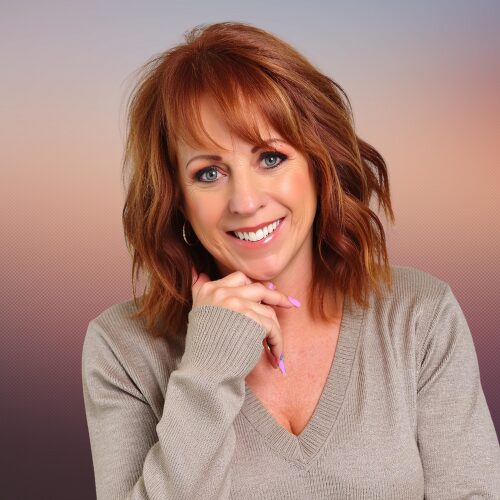
Holly Porter, who holds an honorary Ph.D., is the founder and CEO of Holly Porter International and host of the All Things Retreat podcast. She’s launched 12 successful start-ups over a 35-year career and is a 17-time bestselling author, including her book *Near Death Shift*, which draws on her own near-death experiences and personal transformation. Her work centers on building relationships, community, and prosperity, and she speaks and coaches on topics ranging from personal reinvention to financial mindset. Beyond her business work, Holly supports community causes through board memberships and philanthropy, including her nonprofit, [Adventure Bucket Wish](https://adventurebucketwish.org).
Connect with Holly
- Podcast: All Things Retreat
- Website: hollyporterinternational.com
- LinkedIn: linkedin.com/in/hollyporter
- Facebook: facebook.com/HOLLYANNPORTER
- Instagram: @hollyporterinternational
- YouTube: @IntlRetreatAssociation
Listen to the Full Conversation
This recap only covers the highlights. Holly and I also got into search engine and AI bot behavior around accessible site structure, and more of the physical-venue stories that don’t always come up when accessibility conversations stay online. You can catch the full episode on the All Things Retreat podcast from the International Retreat Association.
Curious what accessibility could look like for your retreats, events, or business? I offer a free review of your website’s homepage no obligation, just a clear look at where you stand. I’m also available for speaking engagements and consulting work like the kind Holly and I discussed here. [Book a free 30-minute call with me](https://forms.lessannoyingcrm.com/view/4077863943411910980720980809254) to talk through what your organization needs, or visit [theaccessibilityadvantage.com](https://theaccessibilityadvantage.com) to see more of my work.
*Accessibility benefits everyone.

2 comments